Juniper set out to elevate how customers interact with their AI-driven network insights, aiming to take complex data ad turn it into something clear, actionable, and trustworthy. I owned the end-to-end design of this new AI experience, guiding everything from early strategic definition to the final interactive prototype
%20(1).webp)
.webp)
Challenge
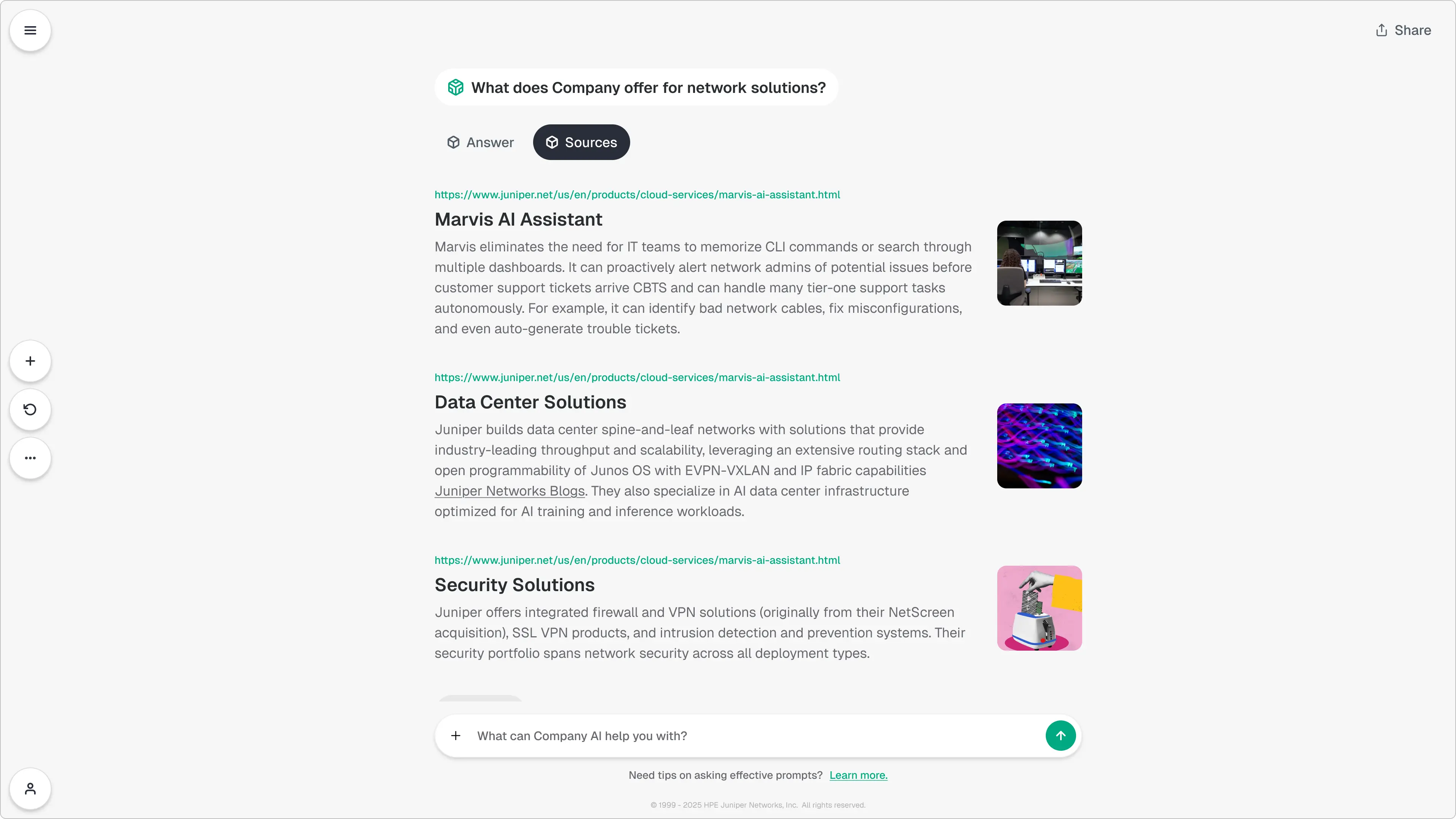
For Juniper Networks, I led the end-to-end design of a new AI experience that made it easier for users to understand, navigate, and act on complex network insights. I started by defining the information architecture, user flows, and core interaction model, ensuring the experience felt intuitive from the first touchpoint.
Through research, iterative prototyping, and close collaboration with key stakeholders, I built a scalable design framework that clearly outlined how insights, alerts, and recommendations should appear across the product ecosystem.
I also created a distinct visual language for AI that aligned with Juniper’s broader design system. The final prototype provided the clarity needed for teams to move quickly, supported faster planning, and helped secure buy-in for Juniper’s AI-Native direction.
.webp)
Approach
To ground the experience in user needs, I began by mapping the information architecture, defining key user flows, and establishing the core interaction model for how insights, alerts, and recommendations should surface. The goal was to reduce cognitive load for network operators and make AI-powered intelligence feel natural within their daily workflows. Through iterative prototyping, collaboration, and continuous refinement, I built a framework that could grow with Juniper’s broader AI-Native roadmap.
.webp)
Outcomes
The final prototype became the blueprint for implementation, giving teams clear UI patterns, behavior definitions, and interaction specs. It also played a crucial role in securing stakeholder alignment, helping leaders understand the product’s value and accelerating internal planning efforts. This work laid the foundation for Juniper’s next generation of AI-powered web and product experiences — turning a complex technical vision into a user-friendly, scalable, and aligned interface.
.webp)

Summary
.svg)